
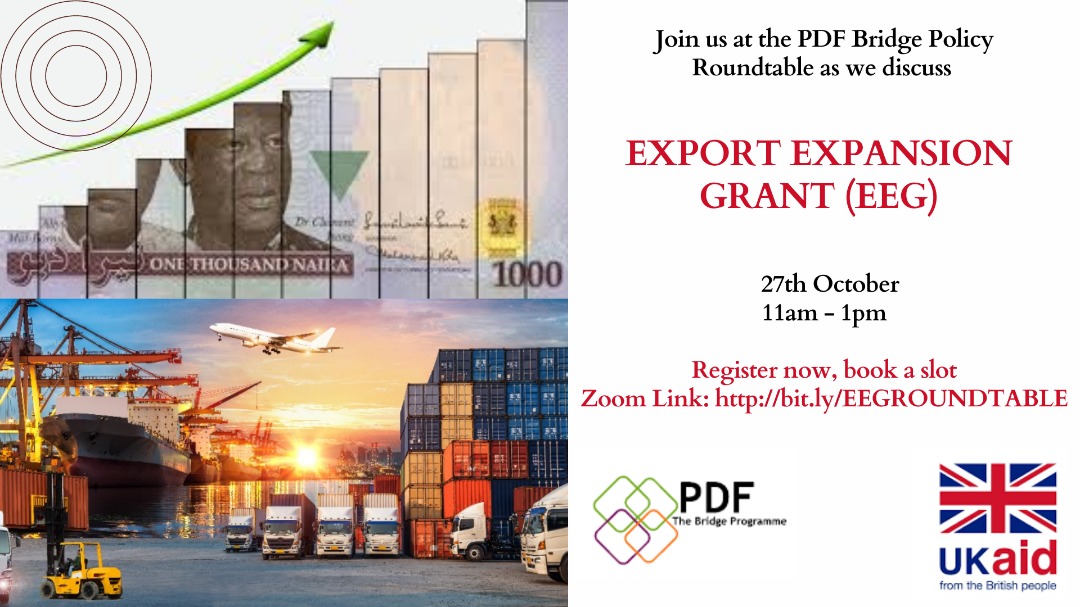
A Roundtable on the Export Expansion Grant

Associated resources
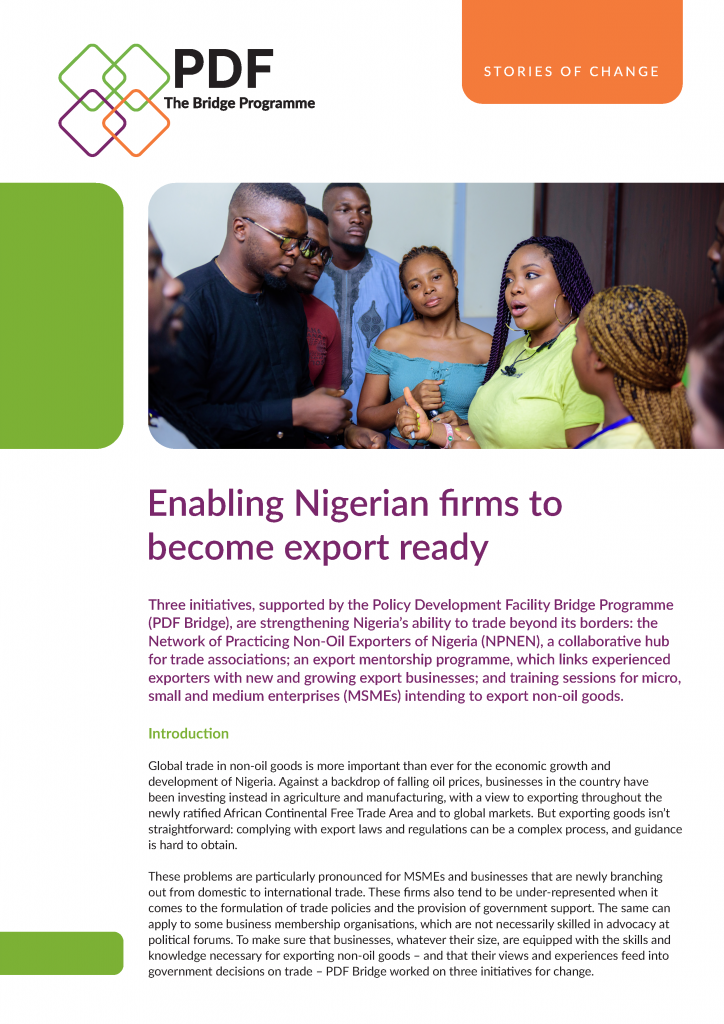
Against a backdrop of falling oil prices, the Nigerian government has woken up to its economic vulnerability to oil-related disruptions. This underscores the need for diversification to non-oil exports. PDF Bridge supported the drive towards growing non-oil export by supporting under-represented non-oil exporters through three strands of work: strengthening Nigeria’s ability to trade beyond its borders through the Network of Practicing Non-Oil Exporters of Nigeria (NPNEN), an export mentorship programme, which links experienced exporters with new and growing export businesses; and training sessions for micro, small and medium-sized enterprises (MSMEs) intending to export non-oil goods were held on; Market Entry Strategies, Understanding export documentation, Raising Finance for Export, Branding, and packaging for export. In addition, Roundtables were held on;
- Addressing Barriers to Access to Foreign Markets – An analysis of Spices & Herbs, Textiles & Garments, and Leather Products;
- Analysis and Impact of Export Expansion Grant on Export Potential, Market Access and Export Competitiveness in Nigeria;
- Improving Market Access through Digital Trade and;
- Analysis of Potentials of Nigeria’s Services Sector for Economic Diversification, Employment and Foreign Trade;
- Diversification and Non-oil Export Opportunities for Nigeria States Post-COVID19 Study
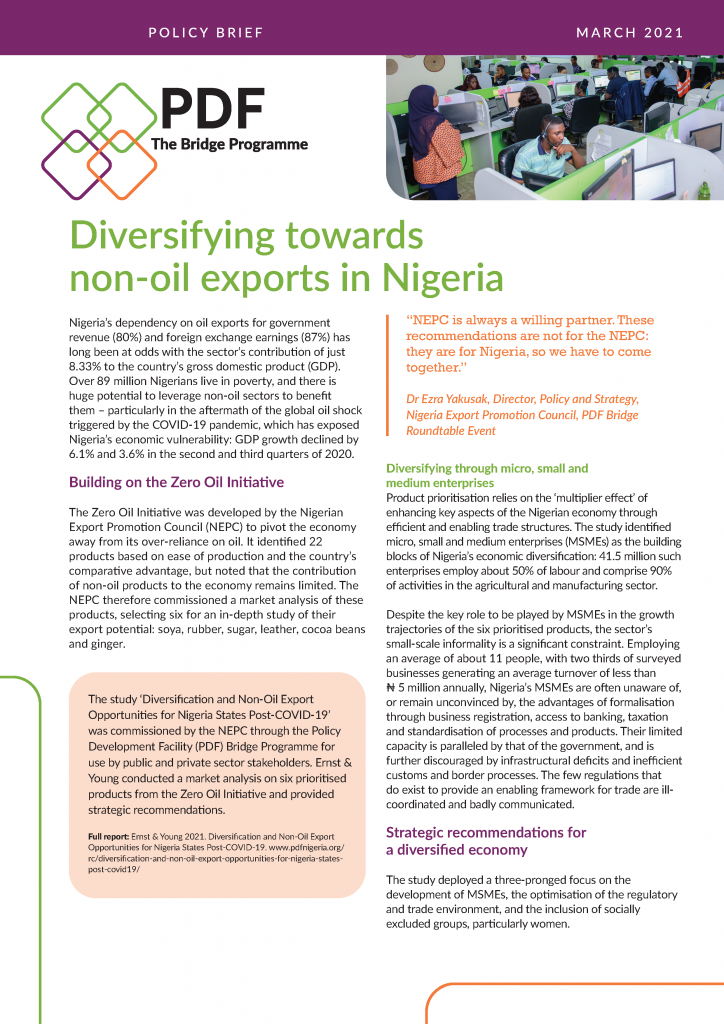
The study ‘Diversification and Non-Oil Export Opportunities for Nigerian States Post-COVID-19’ was commissioned by the NEPC through the Policy Development Facility (PDF) Bridge Programme for use by the public and private sector stakeholders. Ernst & Young conducted a market analysis on six prioritised products from the Zero Oil Initiative and provided strategic recommendations.
PDF Bridge has now developed a policy brief for stakeholders to highlight the key issues and recommendations. The full study can be accessed here.
This report documents the strategic plan for the implementation of the Africa Continental Free Trade Agreement (AfCFTA) by Nigeria following a diagnostic review of the prevailing trade ecosystem including the participants (traders and service providers), the regulating agencies, prevailing policies, and processes as well as the level of regional integration.
Nigeria signed up to the AfCFTA on the 7th of July, 2019. This outlines how PDF contributed to the process that led up to the signing.
This dialogue explores the alternative ways to provide market access to the southeast business hubs from Aba through Onitsha. COVID19 has caused businesses to reimagine their trade value-chain working actively to diversify roles. This dialogue explores ways that new technologies can help bridge the gap between buyers, sellers, and manufacturers.