Clear search

Non-oil exporters dialogue (Forum 6)

Micro, small and medium-scale enterprises are significantly represented among businesses involved in formal and informal cross-border trade and non-oil export, but many are unable to participate competitively due to challenges in the business environment. To support efforts to effectively position Nigeria’s micro, small and medium-scale enterprises for the global market, Policy Development Facility Phase II organised a series of forums aimed at improving access to finance for non-oil exporters and at developing non-oil exports in Nigeria. This report summarises the sixth forum in the series, and focuses on ‘Improving Trade Competitiveness and Business Environment in the South East’.
Policy Brief: Mapping of Exporter Experience in Non-Oil Export Sector in Nigeria

Business environment reform is a key driver of economic diversification and inclusive growth. The Nigerian government took a decisive step in this direction by rolling out executive orders (EOs) on ease of doing business on 18 May 2017. The Orders were targeted at repositioning Nigeria in the global non-oil economy through the improved capacity for competitive non-oil export. Against this background, PDF II funded a mapping of non-oil exporters was carried out and deliberately focused on MSMEs due to their importance to the government’s efforts to diversify the productive base of the economy.

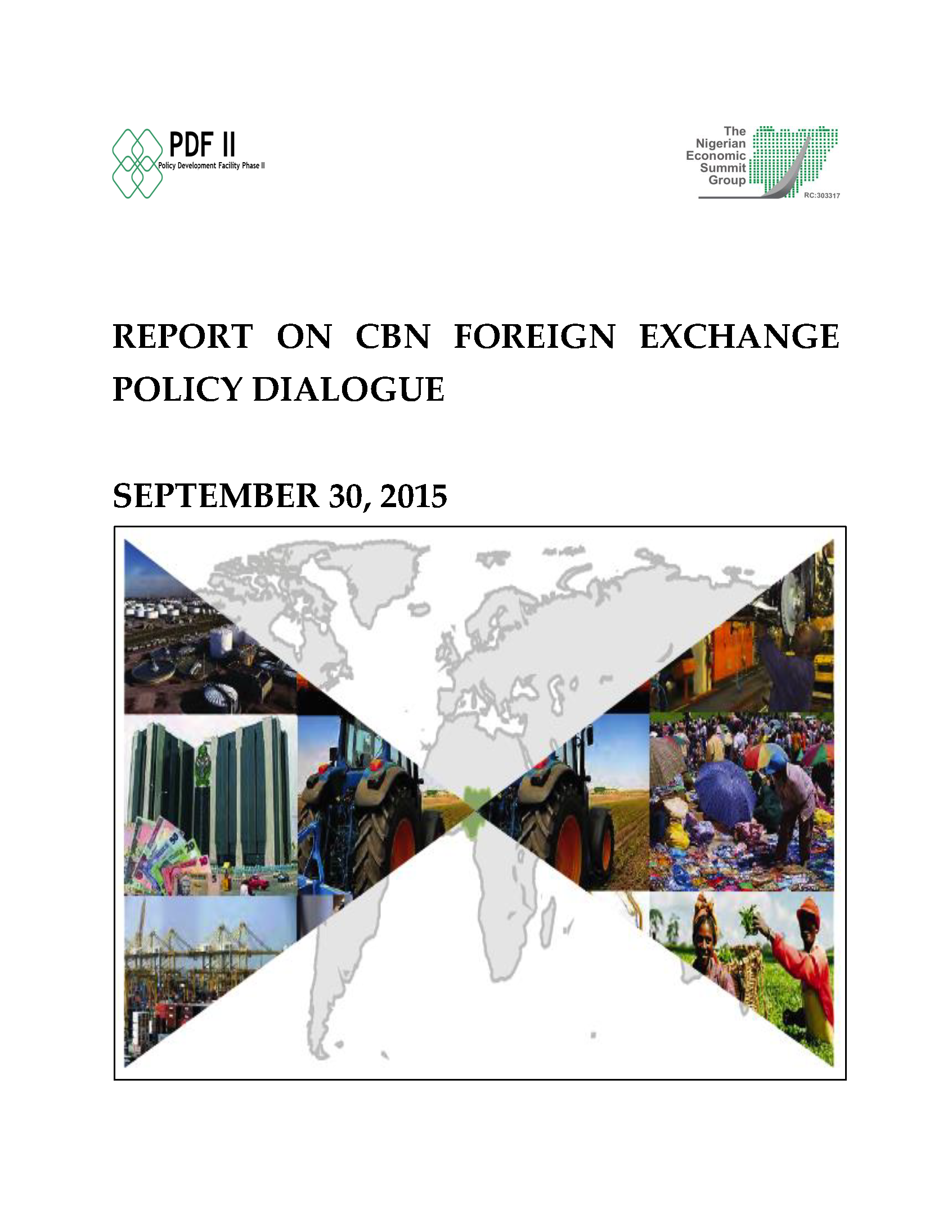
CBN forex dialogue report (I)

In June 2015 the Central Bank of Nigeria restricted the sale of foreign currency for the purchase of certain items following a slump in government revenue resulting from a decline in crude oil prices. The decision aimed to conserve foreign reserves, facilitate the resuscitation of domestic industries and improve employment generation, but proved unpopular, particularly due to its unintended impact on small businesses.

Against this background, the Central Bank of Nigeria forex policy dialogue was held in September 2015 to examine the impact of the foreign exchange policy on small and medium-sized businesses and citizens, gain a better understanding of the bank’s plans and seek alternatives and next steps. This event report sums up the key messages to emerge from the dialogue.

ANALYSIS AND IMPACT OF THE EXPORT EXPANSION GRANT ON EXPORT POTENTIAL, MARKET ACCESS AND EXPORT COMPETITIVENESS IN NIGERIA

Continuous and consistent implementation of the Export Expansion Grant (EEG) has been identified as crucial to the diversification agenda of the Federal Government of Nigeria (FGN). Despite its importance, however, the programme has experienced various implementation challenges and, at least, three suspensions since inception. The aim of this study is to provide evidence-based information on EEG implementation to guide relevant stakeholders to reform and reposition the scheme for greater effectiveness. The study aims to specifically analyse the impact of the grant on the beneficiaries prior to suspension in 2013 and the post-suspension implementation from 2017. It also investigates the challenges faced by beneficiaries in their attempts to access the grant. The study applied both primary through survey and secondary data through desk review to address the set objectives of the study. The survey was conducted through three methods: (i) administration of questionnaires, (ii) Key informant interviews (KII), and (iii) focused group discussions (FGD).

Analysis of Potentials of Nigeria’s Services Sector for Economic Diversification, Employment, and Foreign Trade

Africa’s contribution to global trade in services is little with slow growth despite rapid globalisation and liberalisation. The continent’s intra – African trade in services is also relatively little. Nigeria’s services sector contribution to its GDP is huge, representing 55.8 per cent in 2017. It recorded a growth rate of 1.83percent in 2018. Hence, the services sector possesses the immense potential to promote diversification, employment, and growth, even without a current holistic services sector policy. This study specifically mapped and profiled key services sectors; reviewed domestic regulations relating to services; estimated the current and future potentials for export, and provided associated recommendations.

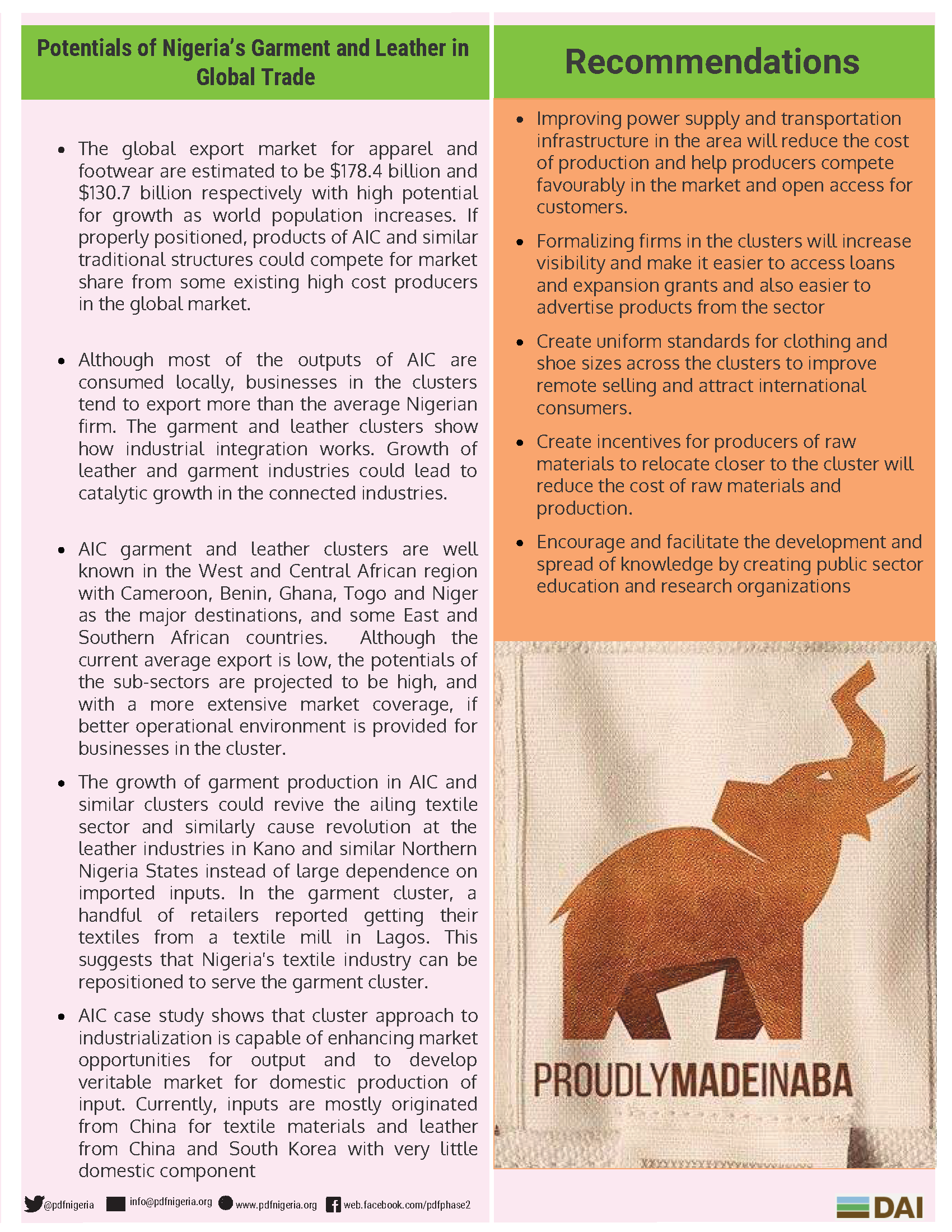
Improving Nigeria’s Non-oil Exports: Aba Industrial City

Aba Industrial City is an aggregation of thousands of MSMEs and mass producers of industrial goods including garment and leather products. If properly harnessed, the mass production capacities of component clusters of AIC and similar models are capable of positioning Nigeria at a competitive advantage in the global garment and leather industrial space. In 2016, the Textile, Apparel, and Footwear sector contributed N2 trillion ($6.6 billion), approximately 2% of Nigeria’s total GDP, to Nigeria’s economy.

PDF II held a two-day capacity building training themed: “Capacity Building for Banks and DFIs”. This is designed to explore access to finance challenges, awareness campaigns, and opportunities that non-oil exporters face with banks in accessing finance. The capacity building covered topics such as Export Industry Regulations and Documentations, payment methods and trade finance instruments, Handling export finance options, managing export risks, understanding the franchising potential etc.